Zero-Day Exploits Explained: The Hidden Cyber Threat
Overview
Zero-day exploits are some of the most dangerous cyber threats because they strike before anyone knows a weakness exists.
This post breaks down what zero-days are, why they are so dangerous, how they are used in real attacks, and what can be done to reduce the risk.
What Are Zero-Day Exploits?
Imagine your house has a secret backdoor that even you do not know about. One day, a thief finds it and sneaks in without setting off any alarms.
That is essentially what a zero-day exploit is in cybersecurity.
Zero-day vulnerability
A weakness in software that is unknown to the vendor and defenders.Zero-day exploit
The technique or code used to abuse that hidden vulnerability.Zero-day attack
When the exploit is actively used against real targets.
The term zero-day means defenders have had zero days to prepare or patch the issue.
Why Are Zero-Days So Dangerous?
No fix available
Since the flaw is unknown, there is no patch or update to protect users.Extremely valuable
Zero-days are traded on underground markets and can sell for millions.Large-scale impact
If the vulnerability affects popular software like Windows, iOS, or browsers, millions of systems can be exposed at once.
The Lifecycle of a Zero-Day Exploit
Even though zero-days sound mysterious, they usually follow a predictable lifecycle.
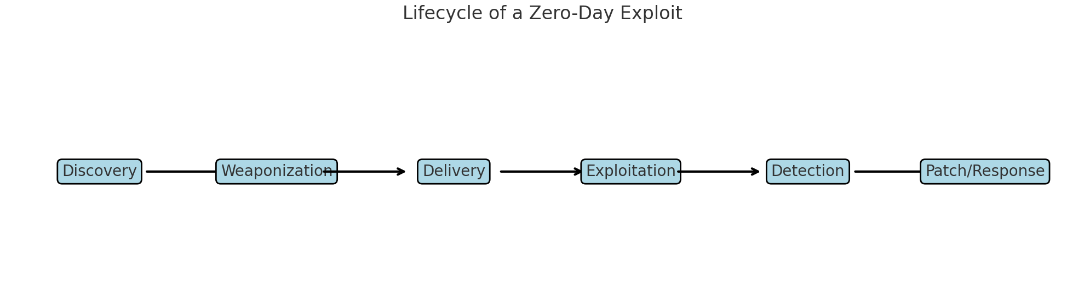
Discovery
A researcher, attacker, or government agency finds a hidden flaw.Weaponization
The flaw is turned into a working exploit.Delivery
The exploit reaches the victim through phishing, malicious links, or infected files.Exploitation
The attacker gains access, executes code, or steals data.Detection
Unusual behavior is noticed by users or security researchers.Patch and response
The vendor releases a security update to fix the vulnerability.
The most dangerous phase is before detection, when attacks happen silently.
Real-World Examples
Pegasus Spyware (2016–2021)
Used multiple zero-day exploits in iOS to infect phones without user interaction. Targets included journalists, activists, and politicians.Stuxnet Worm (2010)
Leveraged several Windows zero-days to sabotage Iran’s nuclear centrifuges, causing real-world physical damage.Microsoft Exchange Attacks (2021)
Zero-day vulnerabilities were exploited to compromise thousands of organizations worldwide.
These examples show that zero-days are not just technical issues. They can have political, economic, and physical consequences.
How Can We Defend Against Zero-Days?
You cannot prevent unknown flaws from existing, but you can reduce their impact.
Patch quickly
Install updates as soon as vendors release them.Use layered security
Antivirus, EDR, firewalls, and intrusion detection can spot abnormal behavior.Apply least privilege
Limit user and application permissions to reduce damage.Network segmentation
Prevent attackers from moving freely after initial compromise.
Defense against zero-days is about reducing blast radius, not eliminating risk.
Final Thoughts
Zero-day exploits are hidden cracks in the digital world. Attackers race to exploit them, while defenders race to detect and patch them.
The best defense is not perfection. It is preparation.
Strong fundamentals, rapid patching, and layered security can make even the most invisible threats far less effective.